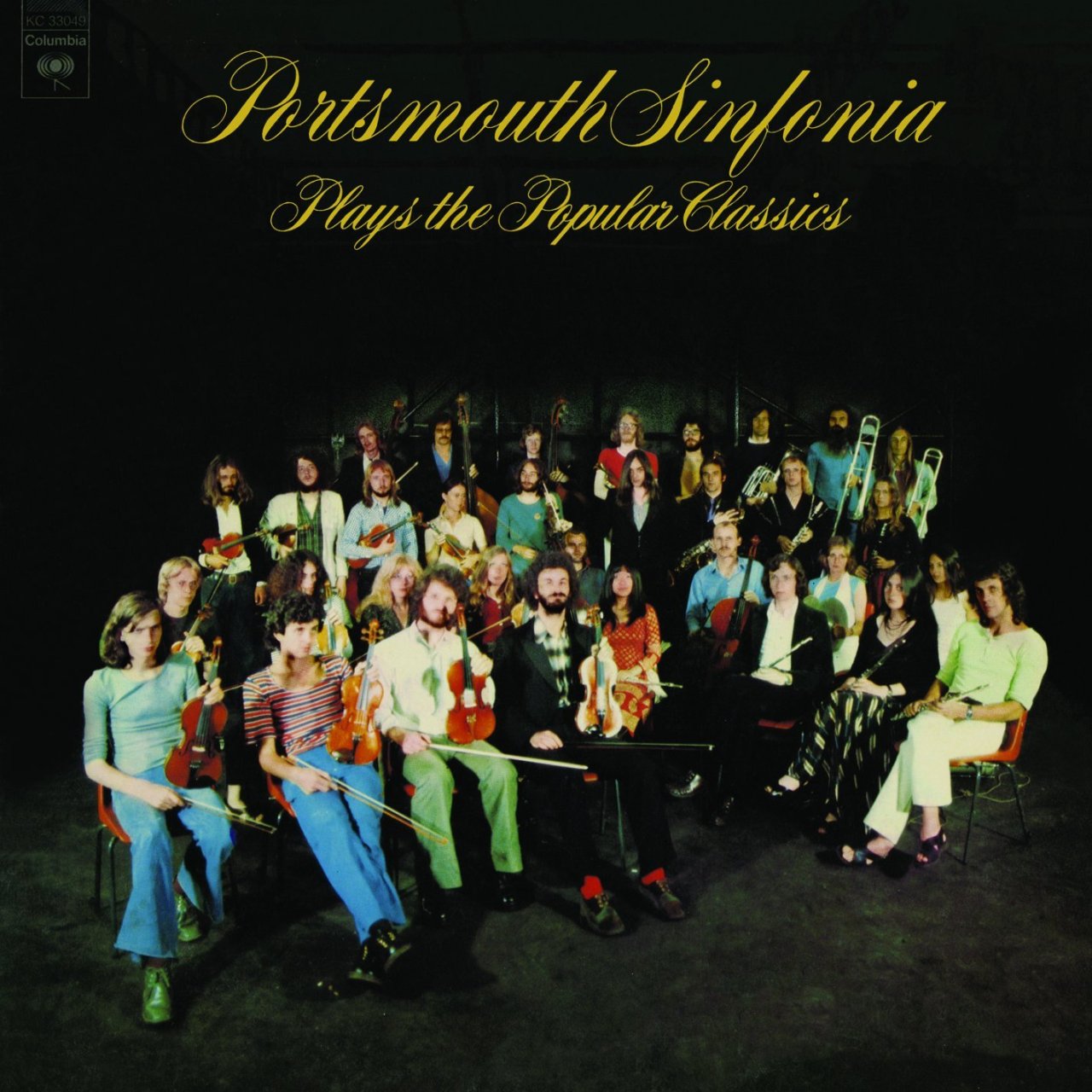
In 1970 a group of students at the Portsmouth School of Art formed an unusual orchestra called The Portsmouth Sinfonia. Anyone could join the orchestra as long as you played an instrument that you had little or no expertise in. Other than that the rules were to show up for rehearsals, try your best and don’t play deliberately badly. The results of this weird experiment were phenomenal as demonstrated in their incredible rendition of Also sprach Zarathustra. But what I find most most fascinating about the Sinfonia’s story is that the more popular they became and the more concerts they played, their abilities accidentally improved and their beautiful, natural-born wonkiness slowly eroded. In the end the Sinfonia disbanded because they got too good! (I tell the story of the Sinfonia in this 2022 talk if you’d like to hear more.)
The story of the sinfonia has inspired me in many ways. It is a cautionary tale of the dangers of inadvertently becoming too accomplished or expert in such way that the edge of not knowing and naive wonder that I find so stimulating disappears. The sinfonia also influenced me directly when I did a weird social experiment called Inexpert back in 2018. Inexpert arose from the curious question “I wonder what the opposite of TED would be?” I have a complicated and somewhat contradictory relationship with TED/TEDx. I’ve done a couple of talks under the brand but also have come to believe that the whole thing has become a parody of itself. The cult of TED seems to have created a particular type of overly-formulaic public speaking that I experience as anything from dull to problematic. So Inexpert was an experiment in flipping the norms of TED just to see what happened.
I’ve long thought that most conferences have it the wrong way round. The norm seems to be that speakers, who are generally regarded as holding a greater level of expertise than those in the audience, go up on stage and demonstrate this expertise in the form of answers, or models or theories. The audience then decide whether that satisfies them or not in an often black and white gladiatorial thumbs up/thumbs down manner. In other words, the audience have a rather passive role in the whole thing.
If I am doing a talk I always consider it my job to make the audience do the hard work. To not try and provide any answers or sense of concreteness, but to simply tell stories in such a way that it coaxes those listening into a space of not knowing. An experience of confusion, surprise and wonder in which they can make their own unique meaning of what I am inviting them to ponder. (Hopefully they also enjoy and are entertained by the stories I tell.) Often people will leave with more questions than answers, but bigger and broader questions than they came in with. (All of this goes some way to explain why my talks are an acquired taste in the tangible, scalable, measurable take-away obsessed corporate world!)
So, on the 11th May 2018 Inexpert happened. I hired a 100 seater Covent Garden theatre and recruited 16 speakers to speak on subjects that they were interested in but had no expertise or experience of. The recruitment process for this was fascinating. Around 100 people applied to the open call and the applications I received fell into three different categories. Firstly, there were people who clearly just apply to every open call! I had applicants proposing they would talk about their new way of thinking about B2B marketing, or give a seminar critiquing agile methodology, or a keynote in which they proposed to share 5 secrets of how to lead in complex times. Needless to say, all of these applications went in the bin. The second category of applicants was fascinating though. Almost 60% of those who applied proposed that they would talk about the importance of inexpertness or about the value of not knowing. These also went in the bin as I didn’t want people to talk about any of this…I wanted them to embody and experience inexpertise live on stage whilst being witnessed by an audience. (I may write more about the phenomena of aboutism in a future issue as it is something that I encounter on an almost daily basis that I think is endemic in creative stuckness.)
The third category was the one that excited me. These were people who seemed to get what I was wanting to experiment with. I remember one guy applied and said “I have always loved robots since I was a kid but I know **** all about them”. I selected him, alongside 15 others who proposed talks on subjects ranging from calculus to looking after a baby to playing tennis. It was important to me that everything about Inexpert embodied inexpertise. For a start, I had never done anything like this before so I had no real idea what I was doing and the John Lyons theatre had never hosted an event like this. I set out to recruit brilliant volunteers to do roles outside the realms of their experience. The person who filmed all the talks had never operated a video camera before. The stage manager had no idea what a stage manager’s role was. The people running the ticket office were brilliant psychotherapists and authors but had never run a ticket office before. But for me the highlight was the inexpert contribution of my friend Nick Parker. Nick is a brilliant guitarist, a deeply experienced writer and a great speaker. But when Nick told me he had been learning to play the trumpet for just six weeks I instantly recruited him to play all of the music for Inexpert live on stage.
The event sold out within a few weeks (it was all not for profit) and on that sunny May afternoon Nick took to the stage to open Inexpert by playing his own rendition of Also sprach Zarathustra - a perfect embodiment of what this weird experiment was all about. What followed was a beautiful and bizarre afternoon. There was laughter, tears, confusion. There was awkwardness, and insight as well as panic and mild physical pain as tennis balls ended up getting randomly hit into the audience. (I had suggested to the person giving a talk on tennis that they should also try to play tennis on stage at the same time to make their talk even more inexpert). But what was most fascinating was that, as all the norms of a conference had been flipped and exploded, new patterns emerged. The normal status dynamics between speaker and audience dissolved as everyone was in this weird space of not knowing together. In fact, the audience felt more anxious and awkward than the speakers at various points. (At one point an audience member felt so uncomfortable that they got up to hug one of the speakers who was giving a long and excruciating talk on nothing, using no words.)
Lots of people wrote blogs and articles about Inexpert 2018 but most said that they could not sufficiently describe the experience other than it was a beautiful and bizarre afternoon of being flawed but willing human beings together. And of course, as the event was considered a success by everyone who attended I was asked several times “When’s the next one going to be?” to which I had to reply “It can never happen again as I have an idea of what I am doing now!”
I learnt from Inexpert 2018 that there is a bitter-sweetness to doing something for the first time. The sweetness comes from that edge-of-the-seat excitement and adrenaline of working it out as you go and learning an incredible amount as you do so. And the bitterness comes from knowing that you can never do that thing for the first time ever again.
All of this came back to me this week as I reflected on the experimental Back Gaemen project I have been doing for the last few months. The intention of this project was to experiment with finding ways of meeting and interacting with new people that felt less socially awkward for me. It has been such a great experience so far - I’ve met lots of people and made some new friends. But one thing I have noticed is that I am accidentally getting better at playing Backgammon, which was never my intention.
At the start of the project I had only played a few games with the old Iranian guy who taught me it in a pub. But at the time of writing this I have now played over 50 games with 18 different people which has meant that my experience level has increased and I am winning more games than I lose. I have come to realise that I really don’t like this. Part of the thrill of the project at the beginning was my genuine lack of expertise in the game. I was inviting people to come into a space of not knowing with me, especially if the other person also hadn’t played before. Even if my opponent was experienced I still got a thrill from losing and experiencing a wonderful kind of backgammon naivety. I am certainly not claiming that I am a backgammon master after 50 games, but I notice a sadness that I am no longer a true beginner. This increase in experience and expertise has changed the nature of the project for me and makes me wonder how much longer I will continue it for.
Malcolm Gladwell famously claimed that people need 10,000 hours of experience to achieve world-class expertise. I’ve no idea how true this is, but what I do know is that I am less interested in the experience of 10,000 hours and more interested in the experience of 10 hours! Ten hours being the amount of time Nick had to practice the trumpet before performing at Inexpert. Ten hours being my first ten sessions of the Back Gaemen project. Ten hours being that beautiful sweet spot that exists between no expertise and just enough expertise to feel safe enough to fully commit to something whilst still experiencing the effervescent creative thrill of the beginners mind.

 Apple
Apple Spotify
 Pocket casts
 Youtube
 Audible
 Substack