Creative Adventures - podcast and Substack newsletter logo
The performative solemnity of the consummate professional - an essay by @stevexoh

The scaffolding of meaning
by Steve Xoh

I decided in May that I am going to walk the entire length of the River Thames. The idea, imaginatively named “The River Thames Project”, came to me after a number of long Thames walks earlier this year and noticing how much I enjoyed getting to know different parts of the river that flows past my studio.

As soon as the idea came to me, I felt an incredible sense of excitement. I ordered a Thames Path Ordnance Survey map and started plotting my first adventure. I’ve always wanted to visit the source of the river, so heading there felt like the obvious first to do. Poppy the dog and I booked an Airbnb in the Cotswolds and spent three days exploring the 21km stretch between Thames Head and Castle Eaton.

I’ve been on many little trips with Poppy over the years and, whilst it has always been lovely to spend time with her, I’ve often been left feeling that something was missing. There was usually a restlessness lurking somewhere beneath the enjoyment. But this trip felt completely different. I loved nerdishly planning every aspect of the three-day exploration and became totally immersed in the experience from the moment we arrived. Each evening, as Poppy and I rested our tired legs and fell asleep together on the Airbnb sofa, I felt an immense sense of satisfaction.

On the drive home, I realised that the thing that had made this trip feel different was that it was part of something bigger. Looking back on previous trips, I can see that simply heading somewhere beautiful doesn’t quite meet an intrinsic need I seem to have for an experience to feel meaningful. This time, without consciously planning it, every mile walked felt connected to a larger fascination: my desire to walk the entire length of the Thames and get to know the river more intimately. Since then I’ve planned further trips, both solo and with friends who live near different parts of the river. I even got inflatable kayak so that I can explore stretches where the path isn’t navigable. This has, in turn, spawned a whole new fascination with river access and the right to roam.

Whilst the excitement of the project isn’t the only thing I think about, having it quietly sitting in the background of my day-to-day life feels like it has contributed something significant to my overall sense of wellbeing. When I have big gaps in my diary, instead of wondering how to fill them, I find myself excited by the possibility of completing another part of the adventure. More than anything, the experience of how this project has made me feel has helped me realise just how much I need things to feel meaningful.

I wrote a few issues ago about how I find the human obsession with purpose somewhat nonsensical and suspect it may be connected to our struggle to make peace with uncertainty, mortality and other existential inconveniences. I’ve never been particularly excited or motivated by having a purpose, a goal or an objective. At the same time, I know I can feel restless in the face of pure leisure or experience a perfectly pleasant day as somehow incomplete. What I realise now is that it is less the activity itself that matters to me and more whether I can find a sense of deep meaning within it.

Edward Deci and Richard Ryan wrote about what they called Self-Determination Theory and suggested that human wellbeing emerges when three psychological needs are met: autonomy, competence and relatedness (feeling connected). Whilst I don’t totally relate to their particular framing, I have recently come to realise that I experience myself as thriving when my needs for freedom, agency and meaning are met. (There is a whole other article I could write about why both freedom and agency are on this list.) What I do like about Deci and Ryan’s idea, however, is the suggestion that wellbeing isn’t dependent on a single thing. For me, all three of these needs need to be met.

What I realise was missing from previous trips away with Poppy was that, whilst I was experiencing the freedom to go where I wanted and a sense of agency through the choices I made, there was nothing larger holding the experience together. Whilst I’d like to be the sort of person who can simply go away and relax with no particular agenda, I’ve noticed that attempting this often leaves my attention scattered, which in turn makes me feel restless and unsettled. This time was different. Being part of a larger and deeply fascinating project somehow transformed the experience. It was as though the concept of The River Thames Project provided just enough scaffolding for my attention to organise itself around something meaningful.

Mihaly Csikszentmihalyi is known for his wonderful research into the human phenomenon of flow. He describes flow as a state in which attention becomes deeply absorbed, self-consciousness fades and our experience of time becomes distorted. In other words, a state of total involvement with whatever is happening right now. Taking Csikszentmihalyi’s work a step further, a recent academic paper (Wain et al.) suggests that for some people, in particular those who are neurodiverse, flow may be more than simply an enjoyable state of immersion. Their research suggests that flow may play an important role in emotional regulation and wellbeing.

As I reflected on my own experience, I began to wonder whether part of what the Thames Project had given me was not simply a sense of meaning, but a meaningful way to organise my attention. This helps me understand how I could hypothetically travel to the same place, walk the same stretch of river and yet experience it completely differently depending on how focused or fragmented my attention was. It seems that the scaffolding of a seemingly pointless but deeply fascinating project gave my attention somewhere to gather. And that was enough to transform a pleasant walk into an experience of flow, meaning and wonder.

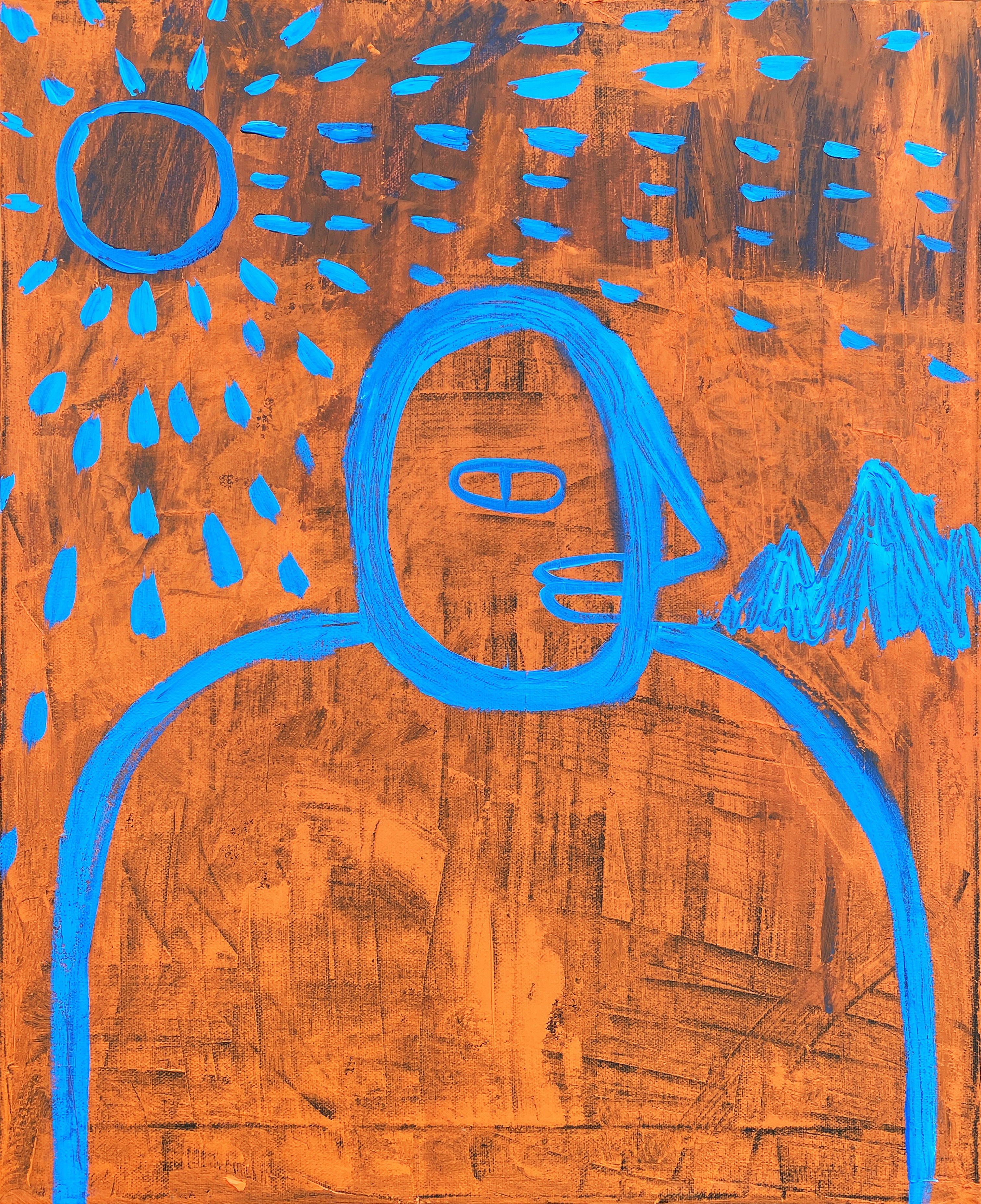
This essay was originally published on Substack. You can listen to the podcast in which Steve talks about this essay via the listening links below.

The scaffolding of meaning
by Steve Xoh

I decided in May that I am going to walk the entire length of the River Thames. The idea, imaginatively named “The River Thames Project”, came to me after a number of long Thames walks earlier this year and noticing how much I enjoyed getting to know different parts of the river that flows past my studio.

As soon as the idea came to me, I felt an incredible sense of excitement. I ordered a Thames Path Ordnance Survey map and started plotting my first adventure. I’ve always wanted to visit the source of the river, so heading there felt like the obvious first to do. Poppy the dog and I booked an Airbnb in the Cotswolds and spent three days exploring the 21km stretch between Thames Head and Castle Eaton.

I’ve been on many little trips with Poppy over the years and, whilst it has always been lovely to spend time with her, I’ve often been left feeling that something was missing. There was usually a restlessness lurking somewhere beneath the enjoyment. But this trip felt completely different. I loved nerdishly planning every aspect of the three-day exploration and became totally immersed in the experience from the moment we arrived. Each evening, as Poppy and I rested our tired legs and fell asleep together on the Airbnb sofa, I felt an immense sense of satisfaction.

On the drive home, I realised that the thing that had made this trip feel different was that it was part of something bigger. Looking back on previous trips, I can see that simply heading somewhere beautiful doesn’t quite meet an intrinsic need I seem to have for an experience to feel meaningful. This time, without consciously planning it, every mile walked felt connected to a larger fascination: my desire to walk the entire length of the Thames and get to know the river more intimately. Since then I’ve planned further trips, both solo and with friends who live near different parts of the river. I even got inflatable kayak so that I can explore stretches where the path isn’t navigable. This has, in turn, spawned a whole new fascination with river access and the right to roam.

Whilst the excitement of the project isn’t the only thing I think about, having it quietly sitting in the background of my day-to-day life feels like it has contributed something significant to my overall sense of wellbeing. When I have big gaps in my diary, instead of wondering how to fill them, I find myself excited by the possibility of completing another part of the adventure. More than anything, the experience of how this project has made me feel has helped me realise just how much I need things to feel meaningful.

I wrote a few issues ago about how I find the human obsession with purpose somewhat nonsensical and suspect it may be connected to our struggle to make peace with uncertainty, mortality and other existential inconveniences. I’ve never been particularly excited or motivated by having a purpose, a goal or an objective. At the same time, I know I can feel restless in the face of pure leisure or experience a perfectly pleasant day as somehow incomplete. What I realise now is that it is less the activity itself that matters to me and more whether I can find a sense of deep meaning within it.

Edward Deci and Richard Ryan wrote about what they called Self-Determination Theory and suggested that human wellbeing emerges when three psychological needs are met: autonomy, competence and relatedness (feeling connected). Whilst I don’t totally relate to their particular framing, I have recently come to realise that I experience myself as thriving when my needs for freedom, agency and meaning are met. (There is a whole other article I could write about why both freedom and agency are on this list.) What I do like about Deci and Ryan’s idea, however, is the suggestion that wellbeing isn’t dependent on a single thing. For me, all three of these needs need to be met.

What I realise was missing from previous trips away with Poppy was that, whilst I was experiencing the freedom to go where I wanted and a sense of agency through the choices I made, there was nothing larger holding the experience together. Whilst I’d like to be the sort of person who can simply go away and relax with no particular agenda, I’ve noticed that attempting this often leaves my attention scattered, which in turn makes me feel restless and unsettled. This time was different. Being part of a larger and deeply fascinating project somehow transformed the experience. It was as though the concept of The River Thames Project provided just enough scaffolding for my attention to organise itself around something meaningful.

Mihaly Csikszentmihalyi is known for his wonderful research into the human phenomenon of flow. He describes flow as a state in which attention becomes deeply absorbed, self-consciousness fades and our experience of time becomes distorted. In other words, a state of total involvement with whatever is happening right now. Taking Csikszentmihalyi’s work a step further, a recent academic paper (Wain et al.) suggests that for some people, in particular those who are neurodiverse, flow may be more than simply an enjoyable state of immersion. Their research suggests that flow may play an important role in emotional regulation and wellbeing.

As I reflected on my own experience, I began to wonder whether part of what the Thames Project had given me was not simply a sense of meaning, but a meaningful way to organise my attention. This helps me understand how I could hypothetically travel to the same place, walk the same stretch of river and yet experience it completely differently depending on how focused or fragmented my attention was. It seems that the scaffolding of a seemingly pointless but deeply fascinating project gave my attention somewhere to gather. And that was enough to transform a pleasant walk into an experience of flow, meaning and wonder.

This essay was originally published on Substack. You can listen to the podcast in which Steve talks about this essay via the listening links below.

(C) Stevexoh 2025