One of the things that has become easier for me over many years of working with groups is worrying less about what to wear. In truth, this has historically been something on my mind for most occasions, not just “work”, and I’m not entirely sure why. I don’t really have any desire to look a particular way. Maybe when I was a teenager or in my early twenties I was keen to signal that I was “alternative” by having long hair and wearing t-shirts featuring obscure bands, but I feel well past that stage now. I think it all comes down to trying to strike an impossible balance between feeling comfortably myself and also fitting in. At a deeper level, it’s probably about a fear of rejection or humiliation.
I have a few memories that may sit at the root of all this. One is of my incredibly cool cousin visiting when I was a teenager and, in what was probably a well-intended bit of unsolicited advice, critiquing my clothes. I recall feeling even more self-conscious after that. I also remember going to a factory Christmas party shortly after I started work at around age 18 and being mocked for wearing a baggy sweatshirt and scruffy black jeans while everyone else wore shirts or jackets. “Nice to see you’ve made the effort, Steve!” is one shame-inducing line that has stayed with me.
And then there was a 1960s evening at the factory social club where people were encouraged to come in fancy dress, and I arrived to find I was the only one who had bothered to dress up. I think I had consciously made an effort that time off the back of the earlier critique, but still ended up feeling embarrassed and ashamed.
When I first started working with corporates, I struggled to strike a balance between being professional enough that people would listen to me and want to work with me, while also not feeling like I was wearing something performative that stopped me from fully being myself. I liked Jonno Hannafin’s concept of the Perceived Weirdness Index, where he suggests that if we are not weird enough we become assimilated, but if we are too weird we are rejected. The art, he says, is to be “just weird enough.” While that helped a little conceptually, I still found myself obsessing over how to hit that elusive sweet spot.
But over time, this has become less of a concern for me. I’ve come to realise that I’m at my best when I feel comfortable in what I’m wearing. And if somebody cannot get past how I look in an initial meeting, then things are only going to become more difficult further down the line when I’m inviting them into stranger and more creative work. I’m happy to compromise to a degree so I don’t come across as a lunatic or someone trying too hard to be different, but beyond that, I know I won’t find it easy to get into creative flow if I feel even a slight incongruence with my clothing.
This approach has generally worked well for me, but there have been a few occasions where expectations have clashed. I remember taking my shoes off while leading an all-day workshop in a carpeted room because it’s what I’d do if I walked into someone’s home and later hearing that participants found it distracting and strange. I also remember joining a Zoom call with a potential client about a workshop and them commenting on my wearing a hat, suggesting it didn’t seem professional and that I wasn’t taking things seriously. I didn’t hear from them again.
I’ve become fascinated by the concept of professionalism, particularly how it manifests in the world of business through rituals, language and appearance. The word professional comes from the Latin profiteri: pro meaning “forth, in public” and fateri meaning “to confess or acknowledge”. So originally, to be professional simply meant to openly declare something about oneself. (I was hoping to find a rabbit-hole connection between the words profiteri and profiterole, but was disappointed to discover there wasn’t really one.)
Between the 16th and 18th centuries, the meaning of “professional” shifted to describe someone with a vocation requiring specialist knowledge, such as law, medicine or theology. The industrial revolution then gave rise to larger, more bureaucratic organisations, and the mechanistic philosophies that underpinned them led to a growing desire for more standardisation and uniformity of humans. As the world of the office worker, and later the corporate citizen, emerged, so too did new standards of dress, formal language and emotional restraint, forms of uniformity that became synonymous with trust and reliability. More recently, as corporate capitalism became the dominant organisational model, the idea of professionalism evolved further. Over time, the concept of professionalism has moved from meaning “I publicly commit to this way of being” to something closer to “I am paid to be this way.”
While I’m sure many people feel comfortable in and even enjoy this way of being, the performative nature of “professionalism” seems to have slipped from conscious awareness in a way that allows it to function as a kind of secret code that quietly excludes and rejects difference. The late academic Ralph Stacey was a big influence on my work. He described organisational life as a complex pattern of human relating that is as predictable as it is unpredictable, as controllable as it is uncontrollable and suggested that organisations create rituals, routines and norms to reduce the anxiety this generates. Stacey argued that many of the unquestioned norms in organisational life function as a “fantasy defence to protect…against the anxiety that uncertainty and ambiguity generate.” So arguably, professionalism is not simply a standard to aspire to, but an agreed social performance designed to reduce anxiety and keep anything outside the norm at bay.
Carnival was a tradition in medieval Europe during which social rules were temporarily suspended and roles reversed. In the period leading up to Lent, peasants would dress as kings, men would dress as women, and satirical performances would mock the clergy and the monarchy. While it wasn’t always consequence-free (hence the use of masks and costumes), authorities often tolerated this brief suspension of normal social order.
The Russian philosopher Mikhail Bakhtin wrote extensively about Carnival in his book Rabelais and His World (1965). In it, he suggests that Carnival wasn’t simply a release from oppressive norms, but a temporary reordering of society in which people could experience social rules and hierarchies as less fixed, natural or absolute than they normally appeared. It allowed many of the suppressed aspects of life, such as humour, contradiction, chaos, and the reality of the body and its needs, to rise to the surface. It is possible that this is part of the reason such practices were tolerated by those in power. As a time-bound expression of these human impulses, Carnival may have acted as a temporary “release valve”, allowing people to briefly express these parts of themselves without fundamentally destabilising the dominant power structures.
I have always found the designated carnival moments of modern capitalist life rather odd. The office Christmas party is one example that comes to mind. Putting aside the fact that I never knew what to wear to these things, I always found them excruciatingly strange. It was a single evening where people were allowed to let their hair down, where hierarchy and structure were awkwardly suspended and where people did and said things that, if done in the office, boardroom or factory, would likely result in a disciplinary process. And then the next day, the performative solemnity of the consummate professional returned, as if nothing had happened. It always felt to me like these were contradictory experiences of forced fun or mandated free self-expression, but with an underlying awareness that certain lines still should not be crossed. (I’m using Christmas parties as just one example here. I’m sure there are many others.)
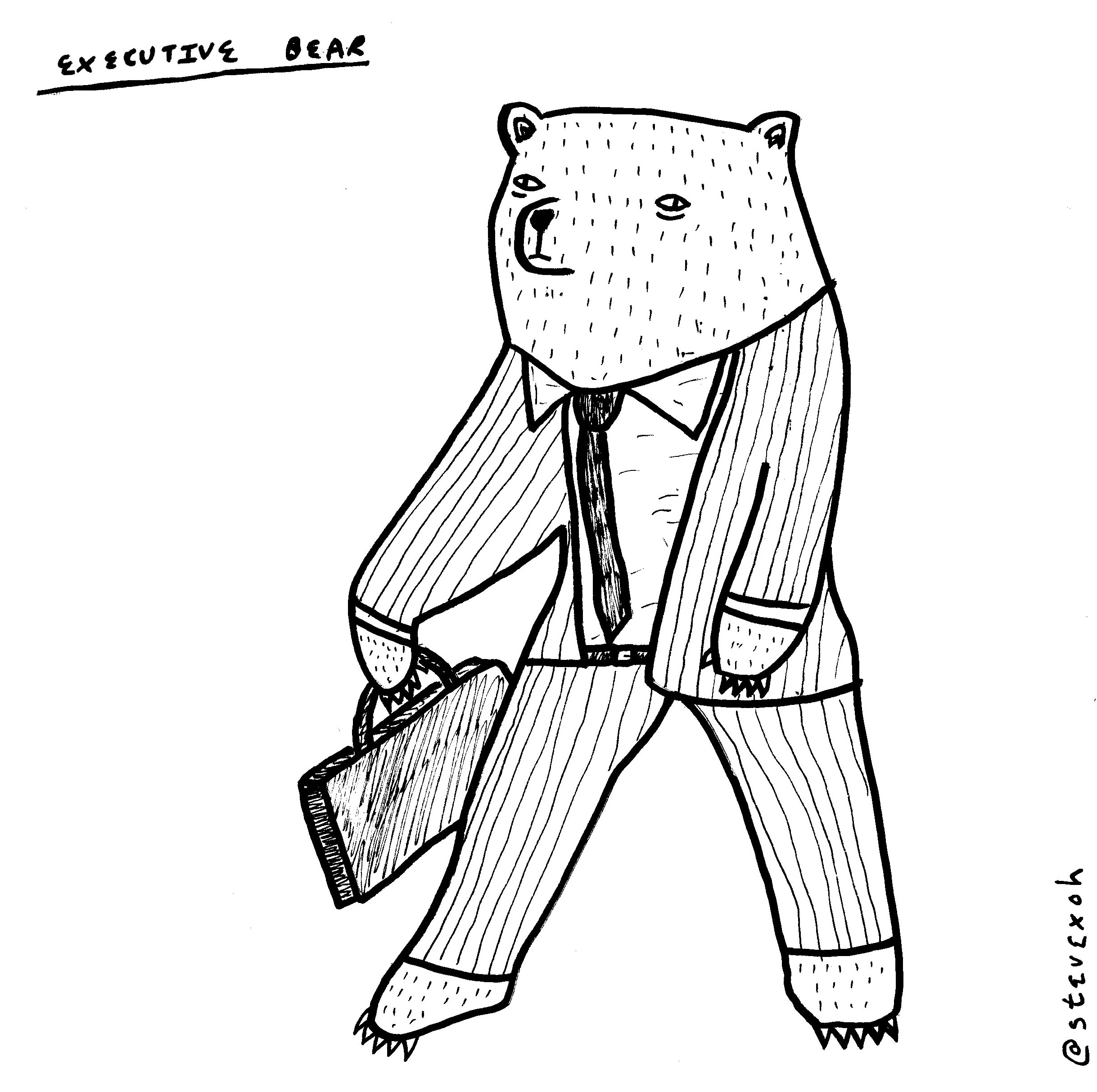
So, it seems to me that the cult of professionalism serves to round off the beautiful wonkiness of being human. It tends to value only those parts of us that help maintain existing structures of power, status and capitalist ideals such as growth, productivity and efficiency, demanding that we leave the rest of ourselves at the office door or factory gate. And yet, the reason I’m often invited into professional environments is because they are seeking something different. But when I show up as my natural self, through my appearance, language, way of working or way of thinking, this difference can be perceived as unprofessional and either rejected or, perhaps worse, gently dampened and smoothed.
I’ve seen many other creatives encounter this same dilemma. They are invited in because they are strange, fascinating, creative and adaptable, but because they don’t fit the established norms, they are either rejected or end up bending themselves so far out of shape that they lose the very essence that made them valuable in the first place. I often think there is nothing more heart-breaking than a clown wearing a business suit in order to get a corporate gig.
I’m left with a sense that embodying an element of carnival in my work is incredibly important. To notice the pull towards conforming with the often overly solemn norms of professionalism, while still finding ways to live and express who I am, how I think and what I do. And to make sure this exists within the everyday life of organisations, not just as a mandated “fun” part of an agenda.
This means I often have to walk away when none of this feels possible. It isn’t the safest or easiest way to earn a living, but it feels far preferable to slowly suffocating my creative spirit.
(My article in issue #1 of this Substack entitled “Four lightly held philosophies for living a creative life talks more about all of this, especially the idea of learning to live below our means to do the work in which we feel free.)

 Apple
Apple Spotify
 Pocket casts
 Youtube
 Audible
 Substack